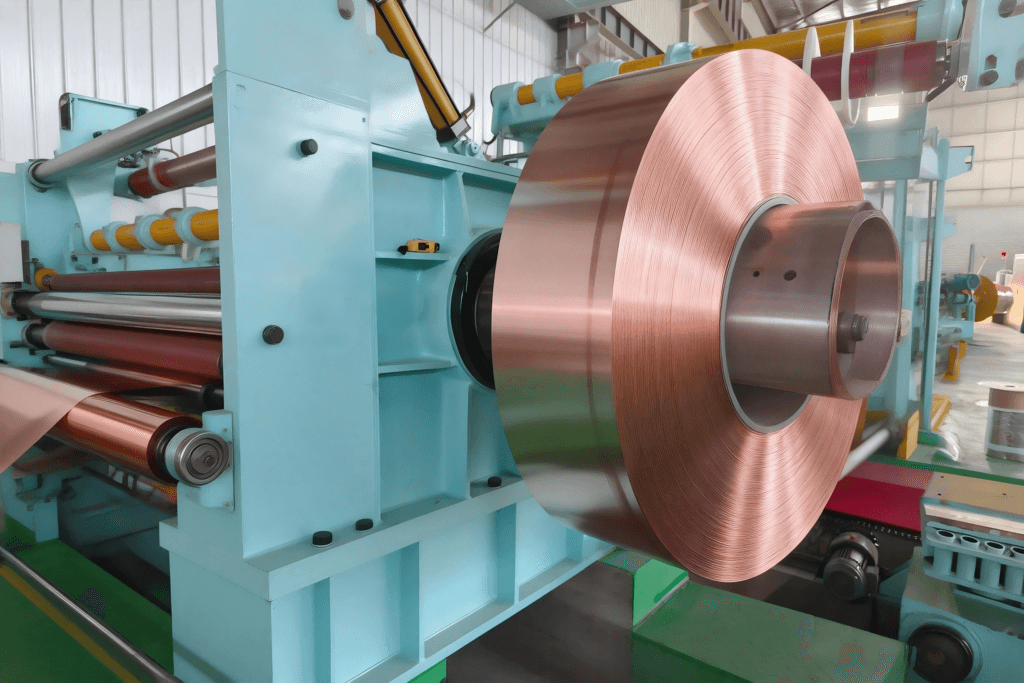
Choosing the right foil edge can be confusing. You might be paying for an outdated process when a better, more modern solution exists. We'll help you choose confidently.
A Deburred Edge1 is the modern, cost-effective, and reliable standard for most transformer winding applications2. Advanced slitting technology3 removes sharp burrs effectively, making it a safe choice that meets the standards of industry leaders like ABB, Siemens, and Schneider, without the extra cost of a Full Round Edge4.
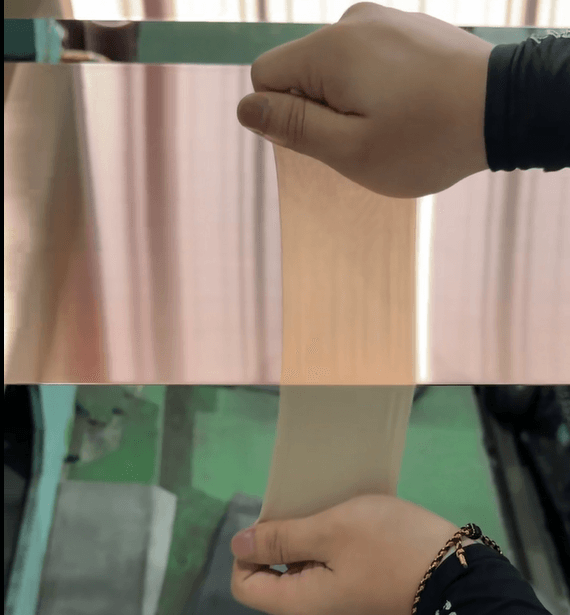
After I published my article on choosing the right copper foil-"How to Choose the Right Copper Foil for Your Application?", I received many follow-up questions. Clients from Saudi Arabia and India, in particular, asked me to write a separate post just on edge types. For years, I've seen customers struggle with the choice between a Full Round Edge4 and a Deburred Edge1. This article is for you. It will break down the differences so you can make the best decision for your project and your budget. Let’s dive into the details.
What’s the Real Difference in Process and Burr Control?
Are you worried that a Deburred Edge1 won't be smooth enough for your windings? This is a common concern, but modern technology has changed the game.
A properly Deburred Edge1 is completely sufficient for transformer windings. The process removes burrs to a microscopic level, ensuring the edge is smooth and won't damage insulation paper. It meets all industry requirements for safety and performance, making it a reliable and effective choice.
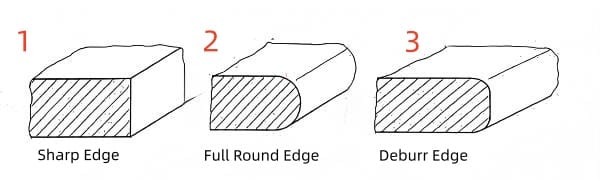
To understand why a Deburred Edge1 is now the industry standard, we need to look at how each edge is made. For a long time, people believed that only a Full Round Edge4 could prevent damage to insulation during the winding process. This was true when slitting technology was less advanced. But things have changed. Our manufacturing process, along with improvements in insulation materials, tells a different story.
The Deburring Process
When a large coil of copper or aluminum is slit into narrower strips, the cutting process naturally creates a small, sharp burr along the edge. The deburring process is designed specifically to remove this burr. We use specialized equipment with high-speed brushes or light grinders5 that pass along the edge of the strip. This action precisely removes the sharp burr without changing the overall rectangular shape of the strip. The goal is simple: create a smooth, safe edge. Modern deburring is so precise that the remaining burr height is often less than 0.01mm, which is too small to pose any risk to high-quality insulation paper.
The Full Round Edge4 Process
Creating a Full Round Edge4 is a more intensive and complex process. It goes beyond simple burr removal. After the strip is slit, it must go through an additional step where the edges are rolled, machined, or drawn through a die. This physically reshapes the sharp corners into a perfectly smooth, semicircular profile. While this process also removes burrs, its main purpose is to change the geometry of the edge. It requires more machinery, more time, and careful calibration, which is why it is a more expensive option.
| Feature | Deburred Edge1 | Full Round Edge4 |
|---|---|---|
| Main Goal | Remove sharp burrs after slitting | Reshape the entire edge into a semicircle |
| Process | Brushing or light grinding | Rolling or machining |
| Edge Profile | Square, with smooth corners | Perfectly rounded (semicircle) |
| Burr Control | Excellent, meets industry standards | Perfect, burr is completely removed |
How Do Cost and Performance Compare in Real-World Applications?
Are you overpaying for an unnecessary feature? A Full Round Edge4 costs more, but in today's world, it rarely offers a performance advantage over a Deburred Edge1.
A Deburred Edge1 delivers nearly identical performance in modern transformers for a lower cost. The combination of advanced deburring techniques and high-strength insulation paper6 makes the extra expense of a Full Round Edge4 unnecessary for most applications, saving you money without sacrificing quality or safety.
The biggest factor in this conversation is cost versus practical benefit. In my five years of discussing this with clients, the conversation always comes back to one question: "Is a Full Round Edge4 worth the extra money?" In almost every case, the answer is no. Industry leaders like ABB, Siemens, Schneider, and nearly all transformer manufacturers in China have made Deburred Edge1 their internal standard. They did this because it is a smart business decision.
The Cost Factor
The reason a Full Round Edge4 is more expensive is straightforward. It requires an extra, separate manufacturing step. This means more machinery, more energy consumption, and slower production speeds. The process itself can also lead to a slight loss of material. In contrast, deburring is often an integrated, high-speed step in the slitting line. It is faster, simpler, and more efficient. By choosing a Deburred Edge1, you are eliminating an expensive and often redundant process, which directly translates to a lower cost for your material.
Performance and Modern Insulation
The real game-changer has been the incredible improvement in insulation paper. High-quality materials, like DuPont's Nomex paper7 or the equivalent high-performance papers we source from top Chinese producers, have extremely high dielectric strength8 and physical toughness. They are not easily torn or punctured. I remember working with a client in Indonesia who manufactures current transformers for export to Europe and Southeast Asia. They are a certified supplier9 for a major global company and are very strict about quality. Initially, they asked about a Full Round Edge4. But their primary focus was on using the best insulation paper available. We sent them samples of our standard Deburred Edge1 foil. They tested it with their high-grade insulation and found it performed perfectly. There was no damage, no insulation breakdown, and no performance issues. They now exclusively use our Deburred Edge1 foil, which saves them a significant amount on every order. This is a perfect example of how investing in good insulation is a better and more cost-effective strategy than paying extra for rounded edges.
FAQ
Is a Full Round Edge4 safer than a Deburred Edge1?
Not necessarily. A properly Deburred Edge1 from a quality supplier meets all safety and performance standards for transformer windings. The key is the quality of the deburring process, which should remove burrs to a microscopic level.
Will a Deburred Edge1 damage my insulation paper?
No. When you use modern, high-quality insulation papers, the risk of a puncture from a well-deburred edge is virtually zero. These papers are designed to be tough and durable, and our advanced deburring process ensures a smooth edge.
Why do some specifications still require a Full Round Edge4?
This is often based on older engineering specifications from a time before modern slitting and deburring technology10 existed. It was a necessary precaution when insulation papers were also less reliable. Today, it is mostly a legacy requirement11 that is no longer necessary for performance.
Can you provide both types of edges?
Absolutely. We are a manufacturer and can produce foil to your exact specifications, including a Full Round Edge4 if your project strictly requires it. However, for most applications, we recommend a Deburred Edge1 as it provides the best balance of performance, safety, and cost.
Conclusion
A Deburred Edge1 is the modern, cost-effective, and reliable choice for most transformer applications, thanks to advances in both slitting technology and high-performance insulation materials.
Explore why Deburred Edge is the modern standard for transformer windings, offering cost-effectiveness and reliability without compromising safety. ↩
Gain insights into the best practices for transformer winding applications, focusing on edge types and their impact on performance. ↩
Learn how advanced slitting technology enhances the deburring process, making it a safer and more efficient choice for transformer windings. ↩
Understand the Full Round Edge process and why it might be considered outdated compared to Deburred Edge in modern applications. ↩
Explore the role of high-speed brushes or light grinders in the deburring process, ensuring smooth and safe edges. ↩
Learn about the advantages of using high-strength insulation paper in transformers and how it complements Deburred Edge. ↩
Discover the features of DuPont's Nomex paper and why it's a top choice for insulation in transformer applications. ↩
Discover the importance of dielectric strength in insulation materials and its role in transformer safety and performance. ↩
Understand the significance of being a certified supplier for transformer materials and the standards involved. ↩
Explore the evolution of modern slitting and deburring technology and its impact on transformer winding applications. ↩
Understand why Full Round Edges are often seen as a legacy requirement and how modern alternatives offer better solutions. ↩