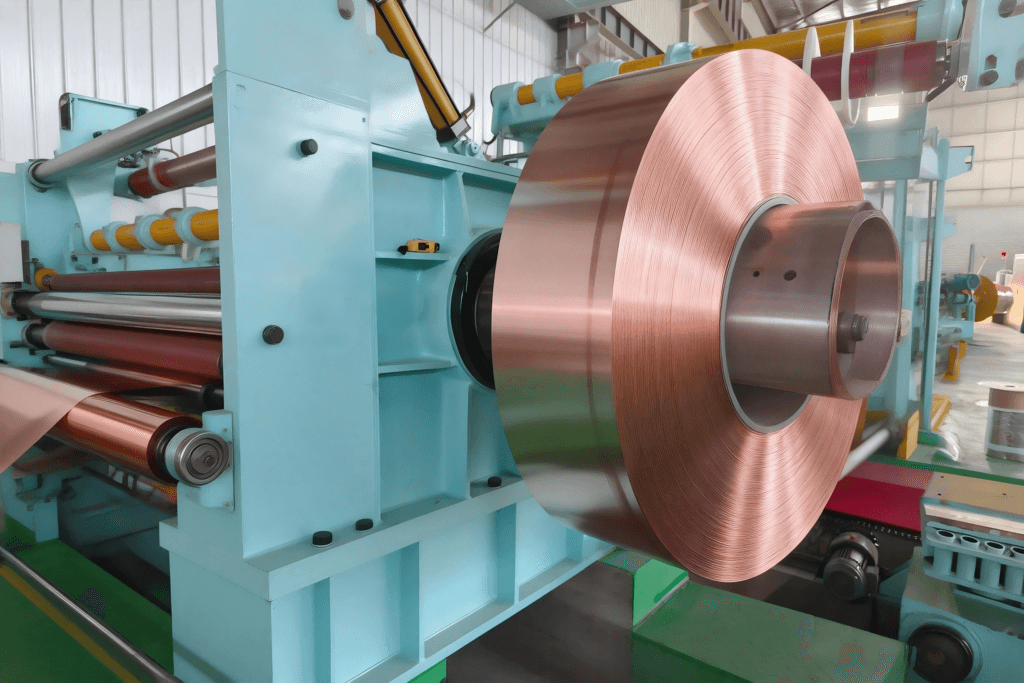
Choosing the wrong copper foil can cause production delays and cost overruns. Are you paying for features you don't actually need? Let's clarify the key factors for a perfect choice.
To choose the right copper foil, focus on conductivity, thickness tolerance, and surface cleanliness1. Critically, understand the edge treatment. A deburred edge is sufficient for most transformer windings, saving you costs over an unnecessarily specified full round edge2, which is a common point of confusion.
I've been in this business for over 12 years with Shenhong Metal. A common conversation I have, especially with clients from the Middle East and India, is about the edges of copper foil. It is a small detail that causes a lot of confusion and costs customers money. But it doesn't have to be this way. Let's break down this topic and the other key factors so you can order with confidence every single time. This knowledge will help you get the right material for your job without overpaying.
Is a Full Round Edge Always Necessary for Transformer Windings?
You're worried that a sharp edge will cut your insulation, causing failures. This makes you request a full round edge2, which increases your costs. But is this fear always justified in practice?
No. For most power and distribution transformer windings, a deburred edge is the industry standard. It's used by global leaders like ABB, Siemens, and Schneider and provides a safe, reliable winding process without the extra cost of a full round edge2.
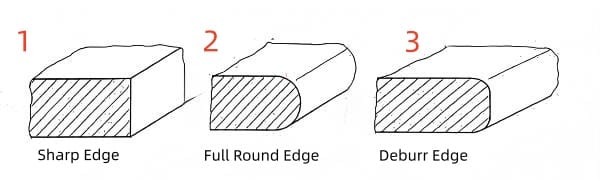
Let's dive deeper into this. I spend a lot of time explaining this to new clients because it's a major point of confusion. The slitting process that cuts copper foil to your desired width can leave a small burr. Edge treatment is simply the process of removing that burr.
A "deburred edge," also called a "rounded edge," is created by mechanically scraping or brushing the edge. This removes any sharp burrs and slightly rounds the corner. This is enough to prevent any damage to the insulation paper during the winding process for almost all standard applications.
A "full round edge2" is a more intensive and expensive process. It creates a perfectly semicircular, smooth edge. While it offers the maximum possible protection, it is usually overkill.
I always tell my customers to look at the industry leaders. We have been a qualified supplier for ABB, Siemens, and Schneider for years. Their internal standards, and those of most major Chinese transformer manufacturers, specify a deburred edge for their winding foil. They have done extensive testing and know it is reliable. A full round edge2 is typically reserved for very special projects, like transformers for offshore wind farms where extreme vibration is a factor. For 95% of jobs, a deburred edge is the smart, cost-effective, and technically sound choice.
| Feature | Deburred Edge | Full Round Edge |
|---|---|---|
| Process | Mechanical scraping or brushing | Intensive milling or rolling |
| Cost | Standard, included in base price | Higher, adds significant cost |
| Primary Use | Most power & distribution transformers | Special applications (e.g., marine, wind) |
| Result | Burr-free, slightly rounded corner | Perfectly smooth, semicircular edge |
What Other Factors Should You Never Overlook?
Focusing only on the edge is a big mistake. A foil with a great edge but bad conductivity or inconsistent thickness will cause big problems. Let's cover the other factors you must check.
Beyond the edge, you must verify conductivity (IACS rating), thickness tolerance, surface cleanliness3 (free of oil and oxides), and lateral curvature (camber)4. These directly impact the performance and lifespan of your final product, like a transformer.
The edge debate is important, but it's only one piece of the puzzle. A high-quality copper foil must deliver on several other technical points. At Shenhong, our quality control focuses intensely on these areas because we know they are critical for the performance of your transformers, EV batteries, or electronic components. Here are the things you should always have on your technical checklist.
1. Electrical Conductivity: This is the most basic function of copper. We measure it as a percentage of the International Annealed Copper Standard5 (% IACS). For transformer-grade copper foil, you should look for high-purity copper6 (99.9% or higher) that delivers a conductivity of 100% IACS or more. Lower conductivity means higher resistance, which creates heat and energy loss in the winding.
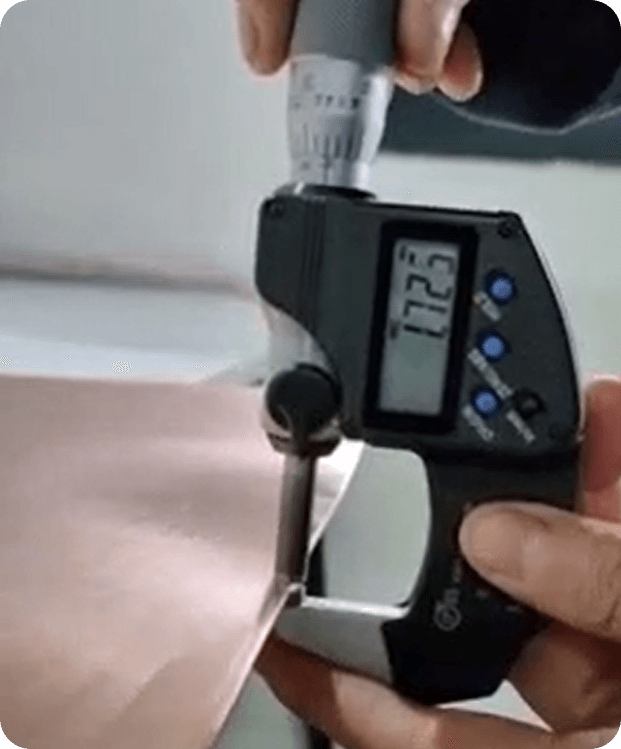
2. Thickness Tolerance: A transformer winding is an engineered component. The thickness of the foil must be consistent. If the thickness varies too much, the electrical impedance will change, and the magnetic field will not be uniform. For most applications, a tolerance of ±0.005mm is excellent. This ensures your winding process is smooth and the final product performs exactly as designed.
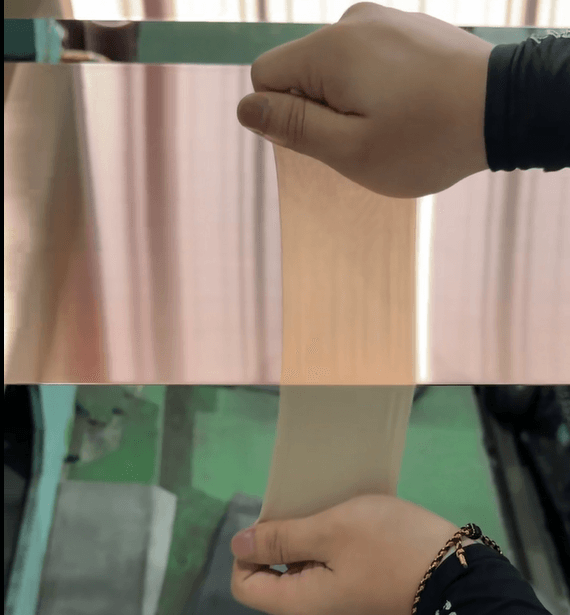
3. Surface Cleanliness: The surface of the copper foil must be completely free of oils, grease, and oxides. Any contamination will interfere with the adhesion of the insulation layer. This can lead to delamination or, even worse, create hot spots that could cause a catastrophic failure. Our foil goes through a final cleaning process and is carefully packaged to arrive at your facility in pristine condition.
4. Lateral Curvature (Camber): This refers to how straight the edge of the foil is over a long length. A foil with high camber will not run straight in a high-speed winding machine7. It will wander from side to side, causing uneven layers and potential jams. We adhere to strict industry standards to ensure our foil is straight and true, making your production process efficient.
What Are Your Most Common Questions About Copper Foil?
Even after discussing the details, you might have more questions. Getting clear answers is the key to avoiding mistakes and ordering the right product. Here are the questions I answer for my clients almost every day.
Clients often ask about the practical difference between edge types, what standard thickness tolerances are, how to ensure cleanliness on arrival, and if we can provide custom sizes. Getting these answers upfront ensures a smooth procurement process and a successful project.
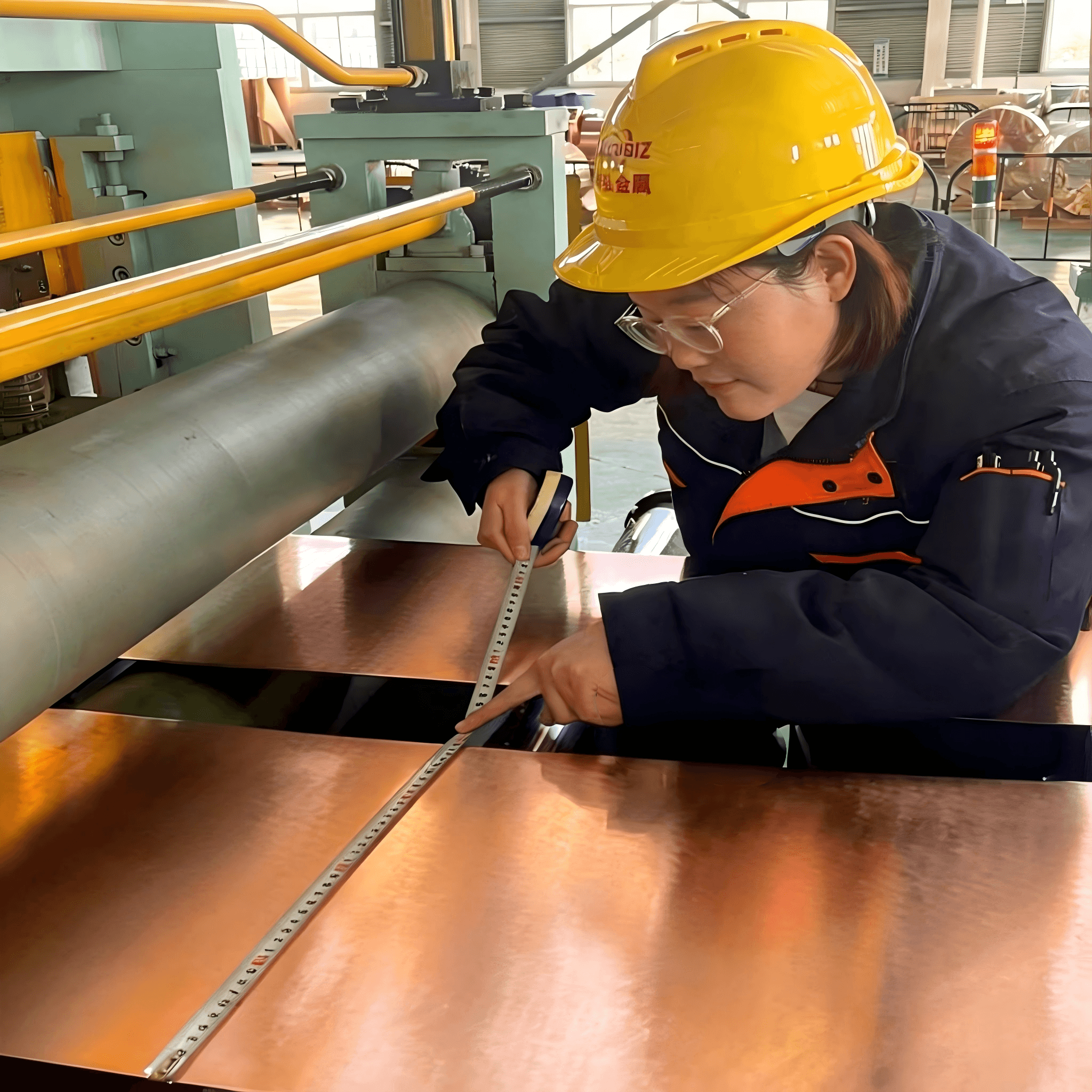
Over the years, I've found that the same questions come up again and again. These are good questions, and answering them clearly helps build trust and ensures a successful project for everyone. Here are the most common ones I hear, along with my direct answers.
Q1: So, when should I actually specify a Full Round Edge?
You should only specify a full round edge2 when the application truly demands it. These are rare cases. Examples include transformers for high-vibration environments like marine vessels or offshore platforms, or very high-voltage specialty equipment where every possible risk of insulation failure, no matter how small, must be eliminated. For standard power and distribution transformers, it is an unnecessary expense.
Q2: What is a typical thickness tolerance we should specify?
It depends on your specific design, but a good starting point for most transformer windings is a tolerance of ±0.005mm to ±0.01mm. This is a very achievable standard for a quality manufacturer like us. If your design requires an even tighter tolerance, we can certainly discuss that. Our team can work with you to find the perfect balance between technical requirements and cost.
Q3: How do you guarantee the surface is clean when it arrives at my factory?
Our quality control doesn't stop when the foil comes off the machine. Our process includes a final cleaning and degreasing stage. After that, the foil is handled in a controlled environment. We pack it with protective interleaved paper8 and seal it in plastic and a robust outer crate to protect it from moisture, oxygen, and contamination during shipping.
Q4: We need a very specific width. Can you provide custom sizes?
Absolutely. This is one of our core strengths as a manufacturer. We have our own advanced slitting and rewinding machines. You can provide us with a drawing or just your required width, and we can produce it for you. We can handle everything from very narrow tapes to wide sheets, with annual capacities of 8,000 tons for copper and 15,000 tons for aluminum.
Conclusion
Choosing the right copper foil is easy when you focus on the right things. Prioritize a deburred edge for most applications, and always verify conductivity, tolerance, and cleanliness for best results.
These factors are crucial for ensuring the performance and longevity of your copper foil applications, making them essential considerations. ↩
Discover when investing in a full round edge is justified, helping you make informed decisions and avoid unnecessary expenses. ↩
Ensuring surface cleanliness prevents contamination, which can lead to failures and inefficiencies in your applications. ↩
Understanding camber helps prevent production issues, ensuring your copper foil runs smoothly in high-speed machines. ↩
Learn about this standard to ensure your copper foil meets the necessary conductivity requirements for your applications. ↩
High-purity copper ensures optimal conductivity, reducing energy loss and enhancing the efficiency of your transformers. ↩
Proper camber ensures smooth operation in winding machines, preventing jams and ensuring efficient production. ↩
This packaging method ensures your copper foil arrives in pristine condition, free from damage and contamination. ↩